
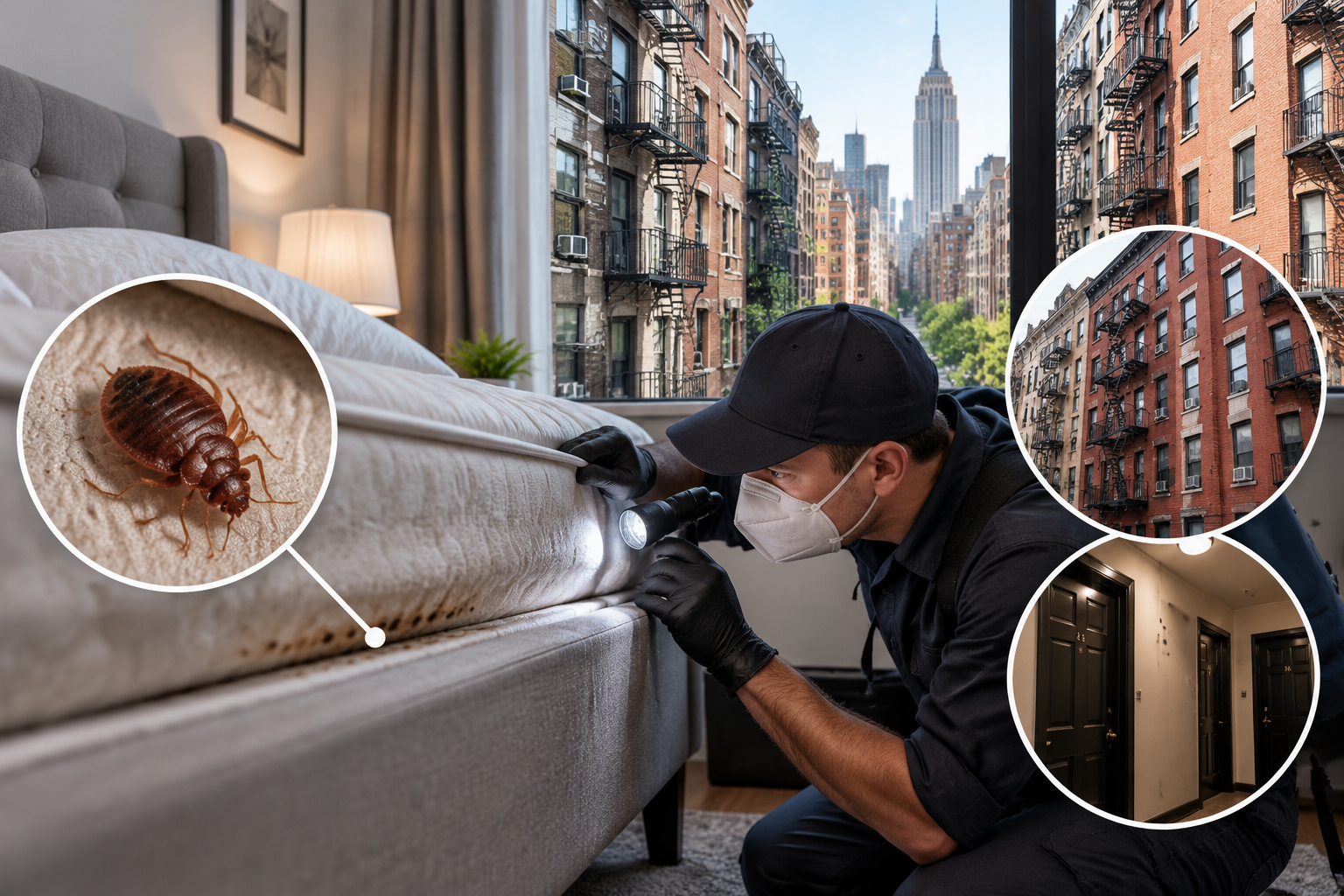
If you are searching for a bed bug exterminator Hells Kitchen NY, you may already know that dealing with bed bugs in New York City can be different from dealing with them in a single family home. Hell’s Kitchen has apartment buildings, shared walls, busy hallways, frequent tenant movement, and many homes located close together. These conditions can make it harder to find every hiding spot and stop bed bugs from returning.
Bed bugs are small, but they can create a large problem when they move through a busy residential building. They can enter through luggage, clothing, used furniture, and other belongings. NYC Health also notes that bed bugs can travel along connecting pipes and wiring.
The good news is that bed bugs can be controlled. The challenge is knowing where to look, responding quickly, and making sure the problem is not being overlooked in nearby areas.
Why Are NYC Buildings Harder to Treat?
A detached home usually has fewer rooms and fewer connections to other living spaces. An apartment building is different.
Several households may share walls, floors, ceilings, pipes, wiring, hallways, laundry rooms, and other common areas. When bed bugs are found in one apartment, nearby units may need to be checked as well.
NYC Health recommends that building owners notify and inspect apartments across, above, and below an affected unit.
This is one of the main reasons a simple spray in one bedroom may not solve the problem.
Common challenges include:
- Shared walls between apartments
- Multiple units in one building
- Bed bugs hiding in furniture and cracks
- People moving belongings between rooms
- Used furniture entering apartments
- Delayed reports from residents
- Shared laundry and common areas
- Repeated movement of luggage and clothing
The building itself can make the problem harder to trace.
Bed Bugs Can Hide in Small Spaces
Bed bugs do not need much room to hide.
They may stay around mattress seams, box springs, bed frames, couches, furniture cracks, floor edges, wall gaps, and other areas close to where people sleep or rest. NYC Health lists mattresses, furniture, floors, walls, and other cracks as common hiding areas.
This creates a problem for residents who only inspect the mattress.
You might see a bug on the bed and assume the bed is the entire problem. In reality, insects could be hiding in other nearby locations.
That is why an inspection should look beyond the place where the first bug was found.
One Apartment May Not Be the Whole Problem
This is where dense housing creates a major challenge. Suppose a tenant discovers bed bugs around the bedroom. The apartment gets treated, but a nearby unit has an infestation that has not been reported.
The resident may later see bed bugs again and assume the first treatment failed. Sometimes the issue is more complicated.
The surrounding units may need inspection to understand whether there is activity nearby. NYC HPD guidance also calls for inspection of adjacent units, units above and below, and common areas when an infestation is confirmed.
For landlords and property managers, this means looking at the building rather than only one room.
People Can Carry Bed Bugs From Place to Place
Bed bugs are good at catching rides.
They may travel in:
- Luggage
- Backpacks
- Clothing
- Used furniture
- Bedding
- Bags
- Other personal belongings
NYC Health says bed bugs can enter homes by attaching to used furniture, luggage, and clothing.
Hell’s Kitchen sees a steady flow of residents, visitors, workers, and travelers. That does not mean people are constantly spreading bed bugs. It simply means belongings move often, which can make tracking an infestation more difficult.
A person may also unknowingly carry an insect from one location to another.
Delayed Reporting Gives Bed Bugs More Time
One of the biggest problems is waiting too long to report a suspected infestation. A tenant might notice small bites but assume they came from mosquitoes. Another person may find a tiny insect but not recognize it as a bed bug.
Some residents may also hesitate to tell their landlord because they worry about blame. That delay can make treatment harder.
NYC Health recommends that tenants report suspected bed bugs as soon as they believe there is a problem.
Early reporting gives the property owner or manager a chance to arrange an inspection before the problem becomes more widespread.
Cleanliness Does Not Prevent Bed Bugs
A common misconception is that bed bugs only appear in dirty homes. That is not true.
Bed bugs are attracted to people and can enter a clean apartment through luggage, clothing, furniture, and other belongings.
A spotless apartment can still develop an infestation.
This matters because blaming a tenant for poor housekeeping can delay the right response. The focus should be on identifying the pest, finding its hiding places, and controlling the infestation safely.
Clutter can give bed bugs more places to hide, but cleanliness alone is not a complete solution.
Used Furniture Can Bring Trouble
Buying a used couch or bed frame can save money, but it also carries a risk if the item has not been inspected.
NYC Health advises residents never to bring furniture found on the street into their homes and recommends checking used furniture carefully.
Mattresses and upholstered furniture deserve extra attention because their seams, folds, and internal areas can provide hiding places.
If a resident brings an infested item into an apartment, the problem can begin without any connection to the cleanliness of the home.
Why DIY Treatment Often Falls Short
When people find bed bugs, their first reaction may be to search for a quick home solution.
That can lead to unnecessary sprays, repeated cleaning, or products that are not designed for the situation.
NYC Health specifically advises against using pesticide bombs and foggers for bed bug control.
The problem with guessing is that you may kill some visible insects while missing those hidden elsewhere.
A better approach is to confirm the infestation first and then follow a treatment plan based on the property.
Treatment May Need More Than One Visit
Bed bug control is not always a one visit job.
NYC Health advises building owners to be cautious of companies that promise complete control after only one visit and recommends choosing a company that provides follow up service.
This makes sense when you consider how well bed bugs can hide.
A professional may need to inspect the property, treat affected areas, monitor activity, and return when needed.
For apartment buildings, follow up can also help determine whether the problem has been contained.
Midway Through the Process, What Should You Do?
If bed bugs have already been confirmed, residents should avoid moving potentially infested belongings from one room to another.
Instead:
- Follow the preparation instructions from the pest professional.
- Keep clothing and other items contained when instructed.
- Avoid moving furniture unnecessarily.
- Tell management if you notice activity in another room.
- Keep track of where you notice signs.
- Complete any follow up treatment that has been recommended.
A professional bed bug treatment Hells Kitchen NY plan should be based on the actual condition of the apartment and the areas that may be affected.
The goal is not simply to treat the place where someone saw a bug. The goal is to address the infestation as a whole.
Property Managers Have an Extra Responsibility
For landlords and building managers, bed bugs can become a property management issue as well as a pest issue.
A resident report should be taken seriously. Management should arrange an appropriate inspection and communicate clearly with affected tenants.
NYC HPD states that property owners are required to address bed bug infestations promptly. The city also requires licensed pest management professionals for apartment bed bug treatments.
Property managers should also keep records of inspections, treatments, tenant communications, and follow up work.
Good documentation can make it easier to track what happened and what steps were taken.
What Can NYC Residents Do to Reduce Risk?
No prevention method can guarantee that an apartment will never encounter bed bugs. However, residents can reduce some common risks.
Before bringing furniture home
Check mattresses, couches, bed frames, and upholstered items carefully.
After traveling
Inspect luggage and clothing. If you suspect exposure, NYC Health recommends washing and drying clothing on hot settings or keeping items sealed until they can be washed.
Around the apartment
Reduce unnecessary clutter and seal cracks or crevices where appropriate.
In shared laundry rooms
Carry laundry in clean bags and place dried clothing directly into those bags before returning home, as recommended by NYC Health.
When you notice a possible bed bug
Do not ignore it. Report the issue and arrange an inspection.
When Should You Call a Professional?
Professional help makes sense when you have confirmed bed bugs, repeated signs, or a problem that continues after attempted treatment.
You should consider professional inspection when:
- You find a live bed bug.
- You keep finding unexplained insects near your bed.
- You notice signs in more than one room.
- A nearby apartment has reported bed bugs.
- The problem returns after treatment.
- You manage multiple rental units.
- You are unsure whether the insect is actually a bed bug.
NYC Health says bed bug infestations can be safely controlled and recommends professional help when needed.
Why Fast Action Can Save Trouble
Ignoring one suspected bed bug may seem easier than dealing with the problem immediately.
In an apartment building, however, waiting can create more uncertainty.
The longer a suspected infestation goes unchecked, the harder it may become to determine where the activity started and whether nearby areas are involved.
Early inspection can provide answers before residents start moving furniture, replacing mattresses, or using unsuitable pesticides.
For landlords, early action can also reduce tenant complaints and help keep the issue organized.
What If the Problem Needs Immediate Attention?
Some situations cannot wait several days. For example, a property manager may discover active bed bugs in a tenant’s apartment. A business may receive a customer complaint. A resident may find several live insects shortly before an important event or move.
In situations where rapid assistance is needed, searching for an emergency bed bug exterminator Hells Kitchen NY can help you find a professional who can assess the situation quickly.
Even in an urgent situation, the focus should remain on proper identification and safe treatment rather than simply using the strongest pesticide available.
NYC regulations also require appropriate licensed pest management professionals for apartment bed bug treatment.
Conclusion
Why is bed bug control so difficult in dense NYC neighborhoods? The answer comes down to the way people and buildings interact. Apartments share walls and building systems, residents move belongings, and bed bugs can hide in small spaces that are easy to miss.
The best response is to act early, report suspected activity, avoid unsafe DIY pesticide methods, and arrange a proper inspection. Building owners and managers should also take reports seriously and follow NYC requirements for professional treatment and follow up.
For residents, landlords, and local businesses that need dependable bed bug control services, Gotcha! Bed Bug Inspectors can provide professional help with bed bug inspections and treatment. Taking action early can make the situation easier to manage and reduce the chance of the problem affecting additional areas.
Frequently Asked Questions
Are bed bugs common in NYC apartments?
Bed bugs are common in New York City, and they can enter homes through luggage, clothing, used furniture, and other belongings.
Can bed bugs spread between apartments?
Yes. Bed bugs can move through connecting pipes and wiring, and NYC guidance recommends checking apartments across, above, and below an affected unit.
Does having a clean home prevent bed bugs?
No. Cleanliness does not guarantee protection. Bed bugs can enter through personal belongings, luggage, clothing, and furniture.
Should I throw away my mattress?
Not automatically. NYC Health recommends discarding furniture only when there is no acceptable treatment option or when a pest professional advises it.
Are foggers safe for bed bugs?
NYC guidance advises against pesticide bombs and foggers for bed bug control because they can make the situation worse.
What should I do after finding one bed bug?
Avoid moving furniture around the apartment. Document what you found, notify your landlord or property manager if applicable, and arrange a professional inspection.
Can bed bugs return after treatment?
They can. A recurring problem may mean that additional activity was missed, nearby areas were not addressed, or follow up treatment is needed. A professional inspection can help determine why the problem continues.