
Finding one bed bug can be stressful. Finding nothing while still waking up with unexplained bites can be even more frustrating. Bed bugs are small, good at hiding, and often stay in cracks or other places that are hard to inspect without moving furniture or taking apart parts of a room.
That is where bed bug treatment Elmhurst NY can become more than a matter of spraying a visible bug. A careful inspection may need to determine whether bed bugs are present when there are few or no obvious signs.
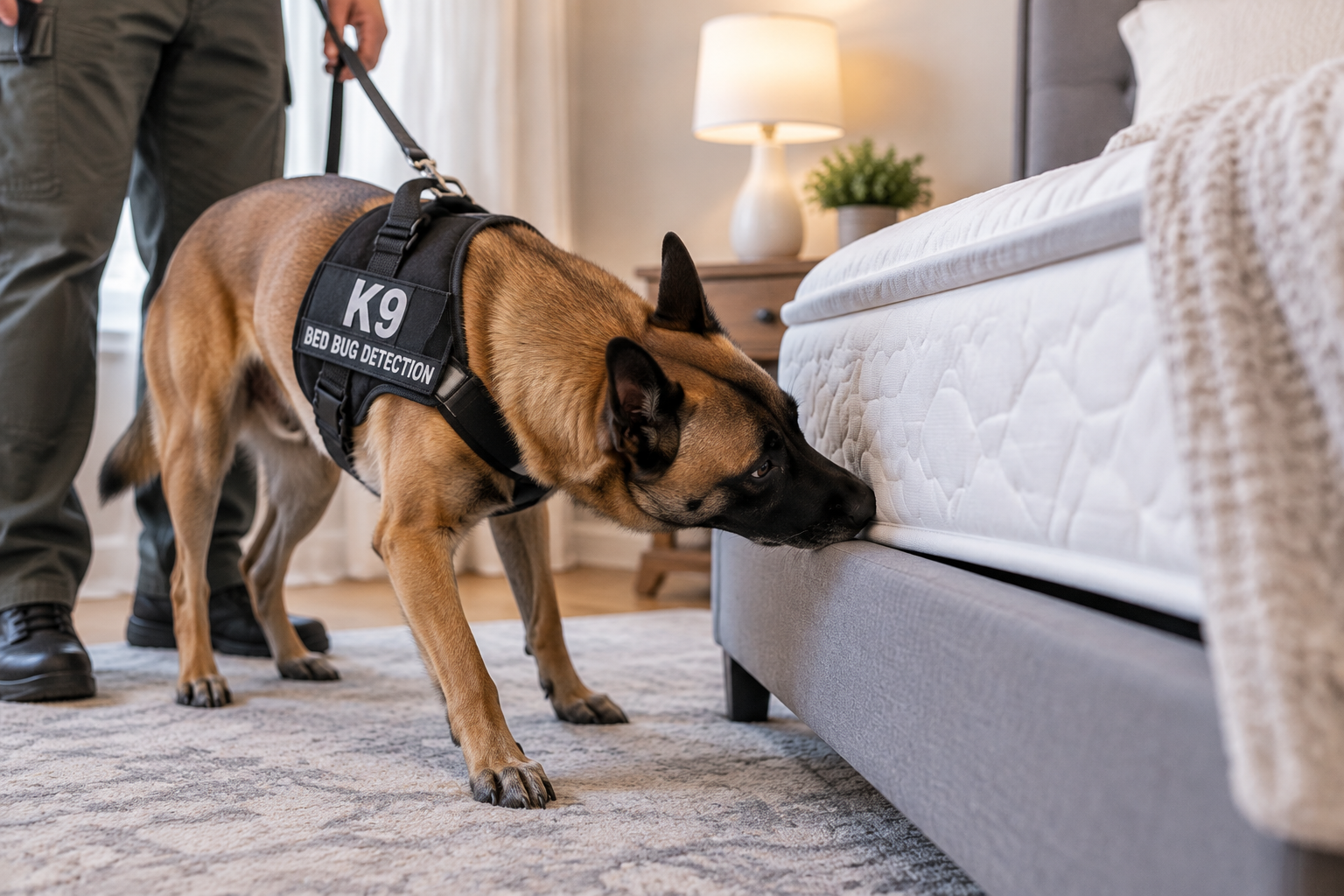
K9 bed bug detection is one method used for this type of inspection. Trained dogs use their sense of smell to locate the scent associated with live bed bugs and, depending on the training program, viable eggs. Research has shown that properly trained dogs can detect bed bugs that people may have trouble finding by sight.
But how does it work, and can you trust a dog to find an infestation that you cannot see?
Why Bed Bugs Can Be Hard to Find
Bed bugs are not large insects. Adult bed bugs are about the size of an apple seed, while younger nymphs are much smaller. Eggs can be even harder to notice.
They also do not stay in one easy to inspect location. The U.S. Environmental Protection Agency says bed bugs may hide around mattress seams, box springs, bed frames, headboards, furniture joints, cracks, electrical areas, loose wallpaper, and other small spaces.
A room may therefore have bed bugs without showing an obvious cluster of insects.
You may notice a few dark marks on a mattress or small reddish stains on sheets. You may find shed skins or eggshells. In some cases, however, there may be no clear sign during a quick visual inspection.
Bites alone do not confirm an infestation either. The EPA notes that bed bug bites can look like bites caused by other insects or skin conditions, and some people do not react to bed bug bites at all.
How K9 Bed Bug Detection Works
A trained detection dog is taught to recognize the scent associated with bed bugs. During an inspection, the dog and handler move through areas where bed bugs could be hiding.
The dog may inspect:
- Mattresses and box springs
- Bed frames and headboards
- Sofas and chairs
- Baseboards and nearby cracks
- Closets and storage areas
- Luggage and furniture
- Areas around walls and other potential hiding places
The dog is not looking for the insect with its eyes. It is using scent. This gives K9 inspection a useful advantage when a pest is hiding behind furniture, inside a small crack, or in another location that a person cannot easily see.
A University of Florida study found that trained dogs could distinguish bed bugs from several other insects. In controlled testing, the dogs also detected live bed bugs and viable eggs.
That does not mean every dog will produce the same result in every building. A separate study involving 11 canine detection teams in naturally infested apartments found wide differences in detection and false positive rates. The researchers concluded that more work was needed to understand what affects canine accuracy under field conditions.
That distinction is worth keeping in mind when deciding how an inspection should be handled.
Can a K9 Find Bed Bugs Before I See Them?
Yes, a properly trained detection dog may locate an infestation before a person finds visible evidence.
This is especially useful when the infestation is small. Early infestations can be difficult to confirm because there may be only a few insects hiding close to a sleeping area.
A dog may detect scent from an area even when the insects themselves are not exposed.
For example, imagine that a bed bug has been hiding behind a headboard. You inspect the mattress, sheets, and visible parts of the bed but find nothing. A trained dog may still alert the handler to the area around the headboard.
That does not mean the dog replaces every other inspection method. A good inspection should consider the dog’s alert, physical evidence, the location, the building layout, and other possible explanations.
The EPA recommends looking for physical signs such as live bugs, dark fecal spots, eggs, eggshells, and reddish stains.
Why Early Detection Can Help
Bed bug problems tend to become harder to manage when the insects spread into more rooms or move into furniture and other hiding areas.
The EPA recommends finding an infestation early because a smaller infestation is generally easier and less costly to address than one that has become widespread.
This is one reason canine inspection can be useful for homes, apartments, hotels, offices, and other properties where finding a small infestation quickly may prevent a larger problem.
For a property manager or business owner, early detection can also help with planning. A confirmed problem may require inspection of nearby rooms or units, especially in multi unit buildings.
The EPA advises that nearby units should be inspected when bed bugs are confirmed in an apartment because bed bugs can move between areas.
What Happens After a K9 Alert?
A dog alert should not automatically be treated as proof that a room needs treatment. The next step should be further inspection.
A pest control technician may look closely at the area where the dog alerted and search for physical evidence. Depending on the situation, additional inspection methods may be used.
This approach is useful because bed bug control is not simply about finding one insect. The goal is to understand where the insects are located and how far the problem may have spread.
If physical evidence confirms bed bugs, treatment can then be planned around the size and location of the infestation.
For property owners, this can prevent unnecessary treatment of areas that do not need it while directing attention to locations where evidence is found.
K9 Detection Is Not the Same as Treatment
It is easy to confuse detection with extermination, but they are two different steps. K9 inspection is focused on finding possible bed bug activity. Treatment is focused on controlling and removing the infestation.
Once bed bugs are confirmed, the right treatment depends on the property, infestation level, hiding areas, furniture, and other conditions.
Professional bed bug control services may include inspection, preparation instructions, treatment, follow up inspections, and monitoring.
The EPA also recommends keeping records of where bed bugs are found and continuing inspections after treatment because missed insects or newly hatched eggs can lead to another round of activity.
When Should You Consider a K9 Inspection?
A canine inspection may be worth considering when there is a reason to suspect bed bugs but a visual inspection has not produced a clear answer.
Some situations include:
- You are finding unexplained bites but cannot locate insects.
- A neighboring apartment or room has a confirmed infestation.
- You recently purchased used furniture and want it checked before bringing it deeper into the home.
- A previous treatment was completed but you are still concerned about activity.
- You manage a hotel, apartment building, rental property, or other location where early detection is important.
- You found one suspected bed bug but cannot determine whether there are others nearby.
Used furniture, luggage, bedding, clothing, and other belongings can allow bed bugs to move from one location to another. The EPA describes bed bugs as good hitchhikers that can travel on these items.
What About a Business or Rental Property?
For businesses, a suspected bed bug issue can create a different set of concerns. A hotel, apartment building, office, or rental property may have multiple rooms and shared areas. Waiting until several people report problems can make the inspection process harder.
A K9 inspection may be useful when the goal is to check several areas quickly and identify rooms that deserve closer attention.
Property managers should still avoid assuming that every dog alert means the entire building has an infestation. Follow up inspection is important.
For a local business serving the Elmhurst and Queens area, the inspection process should also account for nearby rooms, common areas, furniture, and the movement of people and belongings.
How Accurate Are Bed Bug Detection Dogs?
There is no single accuracy percentage that should be applied to every K9 inspection.
One controlled study produced very high detection results with trained dogs under specific testing conditions.
Another study conducted under natural apartment conditions found much wider differences between canine teams.
The practical lesson is simple: training, handling, inspection conditions, and the inspection process all matter.
A good canine inspection should be part of a broader pest inspection rather than treated as a magic test.
The handler also matters. The dog and handler work as a team, so proper training and a clear alert process are important.
What You Can Check Before Calling for Help
If you suspect bed bugs, do not immediately throw away your mattress or furniture.
Start by checking common hiding locations. Use a flashlight and look closely around mattress seams, box spring edges, bed frames, headboards, and nearby furniture.
Look for:
- Live insects
- Tiny pale eggs or eggshells
- Shed skins
- Dark spots
- Small reddish stains
- Insects around cracks and seams
Take photos of anything suspicious if you can do so clearly. Avoid moving potentially infested furniture to another room because this can spread the problem.
If you live in an apartment or multi family property, report a confirmed infestation to the appropriate property manager or landlord. Nearby units may need inspection as well.
Choosing Bed Bug Treatment in Elmhurst
When searching for bed bug treatment Elmhurst NY, look beyond a simple spray service.
Ask how the company handles inspection, whether canine detection is available, how alerts are confirmed, what treatment methods are used, and whether follow up inspections are included.
It is also useful to ask what preparation is expected before treatment. Moving items around without guidance can sometimes spread bed bugs to other parts of the property.
A good inspection should give you a clearer picture of what is happening before treatment begins.
If you are unsure whether the problem is bed bugs at all, identification should come first. The EPA points out that several insects can resemble bed bugs, so correct identification helps prevent treating the wrong pest.
Conclusion
Could a trained dog find bed bugs that you have searched for and still cannot see? Yes, that is one of the main reasons K9 detection is useful. A trained dog can detect bed bug scent in places that may be difficult for people to inspect, especially when an infestation is small or hidden.
However, a canine alert should be followed by careful inspection and confirmation. Research shows that trained dogs can perform very well in controlled settings, while field results can vary between teams and conditions.
For homeowners, landlords, property managers, and local businesses in the Elmhurst and Queens area, early inspection can help prevent a small problem from spreading. Gotcha! Bed Bug Inspectors provides bed bug treatment services and can help property owners understand what may be happening before deciding on the next step.
Frequently Asked Questions
Can K9 dogs smell bed bugs that are hidden?
Yes. Trained detection dogs use scent rather than sight, so they may locate bed bugs hidden in places that are difficult for people to inspect. Research has shown that trained dogs can detect live bed bugs and viable eggs under controlled conditions.
Can a dog find just one bed bug?
A properly trained dog may be able to detect very small infestations. One research study found that trained dogs could detect as few as one adult bed bug under test conditions.
Is a K9 alert proof of bed bugs?
Not by itself. A dog alert should be followed by additional inspection and confirmation. Research in naturally infested apartments has shown that canine accuracy can vary between teams and inspection days.
Can bed bugs hide where I cannot see them?
Yes. Bed bugs can hide in mattress seams, furniture joints, cracks, bed frames, headboards, electrical areas, and other small spaces.
Should I treat my home if I only have bites?
Not based on bites alone. Bed bug bites can look like bites or skin reactions caused by other sources, and some people do not react to bed bug bites. Physical evidence and proper inspection are better ways to confirm an infestation.
Can bed bugs spread from one apartment to another?
They can move between areas and can also travel on clothing, luggage, furniture, bedding, and other belongings. The EPA recommends inspection of nearby units when an apartment infestation is confirmed.