
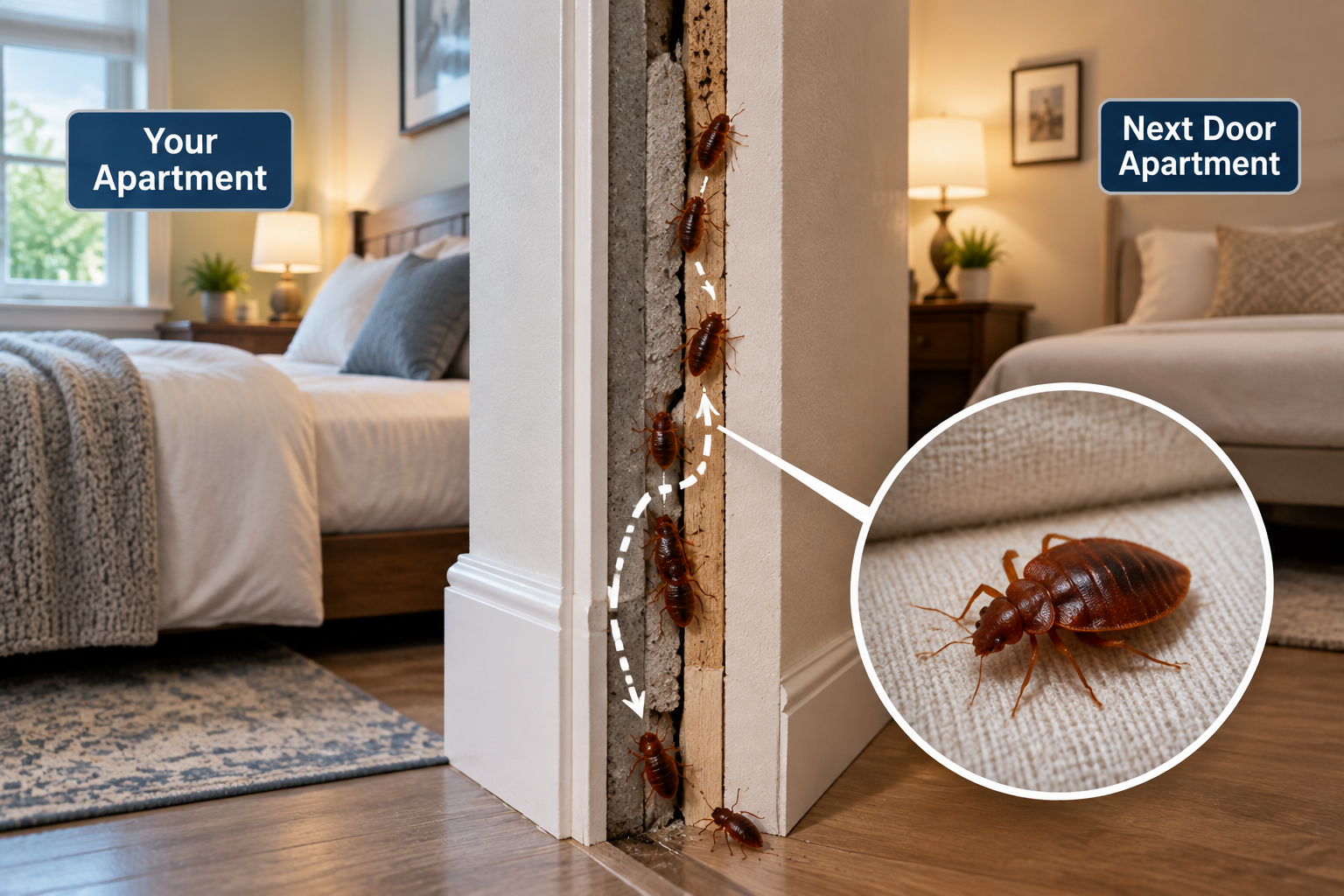
Living in an apartment comes with one major concern when a pest problem appears: the issue may not stay inside one home. This is especially true with bed bugs. If a neighbor tells you that bed bugs were found in the apartment next door, it is reasonable to wonder whether those pests can reach your home too.
The short answer is yes. Bed bug exterminator Belmont NY searches often come from renters and property managers who want to know how bed bugs move between apartments and what they can do before an infestation becomes larger. Bed bugs cannot fly or jump, but they can crawl through small openings and may also travel inside clothing, bags, furniture, and other belongings.
The U.S. Environmental Protection Agency recommends that nearby apartments be inspected when bed bugs are found in a multi unit building. This matters because treating one apartment without checking surrounding areas may leave another source of bed bugs untreated.
Can Bed Bugs Move Between Apartments?
Yes, bed bugs can move from one apartment to another. They are small insects that spend much of their time hiding near places where people sleep or rest. A mattress, bed frame, sofa, chair, carpet edge, or small crack can give them a place to hide.
In apartment buildings, bed bugs may move through cracks and gaps around walls, baseboards, pipes, electrical openings, doors, and other building features. They can also move when people unknowingly carry them from one apartment to another.
This does not mean that every nearby apartment will become infested. The level of risk depends on the building layout, the size of the infestation, how long the bugs have been present, and whether nearby units are inspected and treated.
How Bed Bugs Travel Through Buildings
Bed bugs do not need a large opening to move. Their flat bodies allow them to hide in narrow spaces that people may overlook during normal cleaning.
A bug could move from an infested apartment into a neighboring space through a gap around a pipe or wall opening. Another possibility is that a person carries a bug on a backpack or piece of clothing after spending time inside an affected apartment.
Shared spaces can also create opportunities for movement. Laundry rooms, hallways, storage areas, lounges, and common furniture should receive attention when a building has a confirmed infestation.
The EPA advises residents and property managers in multi family housing to pay attention to neighboring units and possible pathways between apartments.
Can Bed Bugs Travel Through Walls?
Bed bugs may use openings and wall spaces to move between areas of a building. They are not actually boring through solid walls. Instead, they can take advantage of existing gaps and openings.
Places that may deserve inspection include:
- Gaps around baseboards
- Openings around pipes
- Spaces near electrical outlets
- Cracks around doors and frames
- Gaps behind loose trim
- Areas where walls meet floors
- Openings around utility lines
Sealing suitable cracks and crevices can reduce possible hiding and movement areas. The EPA also recommends steps such as sealing cracks and using door sweeps as part of bed bug prevention in multi family housing.
What Signs Should You Look For?
One reason bed bugs spread without being noticed is that they are good at hiding. You may not see an adult bug even when activity is present.
Instead, look for signs around your bed and furniture. Small dark spots on mattress seams may indicate bed bug droppings. You may also notice shed skins, eggs, eggshells, or small reddish stains on bedding.
A simple inspection should focus on places where people spend several hours at a time. Check mattress seams, the underside of the mattress, bed frames, headboards, nearby tables, sofas, and chairs.
Bites can also cause concern, but bites alone do not confirm an infestation. Different insects and skin conditions can create similar marks. Finding physical evidence is much more useful when trying to identify a bed bug problem.
Why Nearby Apartments Need Inspection
When bed bugs are confirmed in one apartment, checking only that unit may not give the complete picture.
Suppose an infestation has been present for several weeks. During that time, some bugs may have moved into the apartment next door. If the original apartment receives treatment but the neighboring unit is never checked, the second infestation may remain active.
Those bugs could later move again.
The EPA recommends evaluating adjacent units when bed bugs are reported in multi family housing. Depending on the building, units above, below, and beside an affected apartment may also need attention.
This is particularly important for property managers. A single complaint should not always be treated as an isolated event.
What Should Renters Do First?
If you learn that bed bugs have been found next door, there is no reason to panic. There are several practical things you can do while your property manager arranges the next steps.
1. Report The Situation
Tell your landlord or property manager that you are concerned about possible exposure. Ask whether nearby apartments will be inspected.
Do not assume someone else has already reported the issue. Early communication can help the building respond before more units become involved.
2. Inspect Your Bedroom
Start with the area around your bed. Check mattress seams, the bed frame, headboard, box spring, nearby furniture, and cracks close to the sleeping area.
If you find a suspicious insect, try to preserve it in a sealed container or take a clear photograph. Identification can prevent unnecessary treatment for the wrong pest.
3. Avoid Moving Furniture
Do not carry furniture from one room to another because you suspect bed bugs. Moving an infested item can spread the insects to a clean area.
The same rule applies to mattresses, blankets, bags, and other belongings. Keep potentially affected items contained until you know what you are dealing with.
4. Handle Laundry With Care
If your building has shared laundry facilities, take extra care with clothing and bedding. Place laundry in sealed bags before carrying it through common areas.
The EPA recommends using a clothes dryer on high heat for suitable items because heat can kill bed bugs.
When Is Professional Treatment Needed?
Professional help becomes more important when you find live bed bugs, repeated signs, or activity in several areas.
Trying random sprays can make the situation harder to manage. Bed bugs can hide in places that are difficult to reach, and treating only visible areas may leave hidden insects behind.
If you need bed bug treatment Belmont NY, a professional inspection can help determine whether there is an active infestation and where treatment should focus.
A professional can also help property managers decide whether neighboring units need inspection. This can be especially helpful in apartment buildings where several homes share walls and utility spaces.
When Should You Seek Emergency Help?
Some situations require a quicker response. A hotel manager, landlord, business owner, or resident may need help quickly when live bed bugs are being found repeatedly or when an infestation is affecting occupied rooms.
An emergency bed bug exterminator Belmont NY may be useful when there is a confirmed infestation that needs prompt attention. Fast action can help limit disruption, but treatment should still be based on proper identification and inspection.
For businesses, the issue can be even more sensitive. Hotels, rental properties, offices, stores, and other commercial locations depend on a clean and comfortable environment. A pest complaint can affect customer trust if the problem is ignored.
The goal should be to locate the source and treat the affected areas correctly rather than simply spraying every room.
What Can Property Managers Do?
Property managers have an important role in stopping bed bugs from spreading throughout an apartment building.
When a resident reports bed bugs, management should respond quickly and communicate clearly with residents. Nearby units may need inspection, and residents should receive clear instructions about preparing for treatment.
A useful response can include:
- Inspecting the reported apartment
- Checking nearby apartments
- Identifying possible movement routes
- Giving residents preparation instructions
- Arranging professional treatment
- Monitoring affected areas after treatment
The EPA recommends inspection of surrounding units and continued monitoring after treatment.
Property managers should also keep records of reported cases, inspections, treatments, and follow up visits. This makes it easier to understand whether the problem is improving or returning.
Can You Prevent Bed Bugs From Entering?
No prevention method can provide complete protection, but several habits can lower the chance of bringing bed bugs into your apartment.
Be careful when purchasing used furniture. Inspect mattresses, couches, chairs, and other upholstered items before bringing them inside. When traveling, inspect luggage before storing it at home.
You should also avoid placing bags and suitcases on beds when staying away from home. After returning from a trip, inspect luggage and clothing before putting everything away.
Keeping clutter under control also makes inspections easier. The EPA recommends reducing clutter and regularly checking areas where bed bugs could hide.
For apartment residents, awareness is especially useful when a neighboring unit has already reported an infestation.
What Should You Avoid Doing?
A bed bug discovery can lead to rushed decisions. Unfortunately, some actions can spread the problem instead of solving it.
Do not throw an infested mattress into a shared hallway. Do not move furniture between rooms without professional advice. Do not use large amounts of pesticide simply because you want to get rid of the bugs quickly.
The EPA notes that treatments can fail when hiding areas are missed or nearby areas are not addressed.
It is also important to avoid assuming that one treatment always solves an established infestation. Follow up inspections may be needed to determine whether activity has stopped.
Could Bed Bugs From Next Door Reach Your Home?
If a nearby apartment has confirmed bed bugs, waiting until you find one in your own bedroom is not the best approach. Reporting the situation, inspecting nearby areas, and working with property management can help identify a problem sooner.
For anyone searching for a bed bug exterminator Belmont NY, the main goal should be more than treating the first apartment where a bug was found. The surrounding units and possible movement routes should also be considered.
Bed bugs can be difficult to manage when residents and property managers work separately. A coordinated response gives everyone a better chance of finding the source and stopping continued movement.
Gotcha! Bed Bug Inspectors provides professional bed bug control services for residential and commercial properties. Their team can help with inspections and treatment when bed bug activity is suspected or confirmed.
Conclusion
Could a bed bug problem in the apartment next door affect your home? Yes, it can, but early attention can make the situation much easier to manage. Residents should report nearby infestations, inspect sleeping areas, avoid moving potentially affected belongings, and work with property managers on professional inspection and treatment.
Gotcha! Bed Bug Inspectors is a good option for people who need experienced help with bed bug control services. Taking action early can help protect your apartment, rental property, or business from a larger infestation.
Frequently Asked Questions
Can bed bugs spread from the apartment next door?
Yes. Bed bugs can move between apartments through cracks, gaps, wall openings, shared areas, belongings, and other pathways. The risk varies from building to building.
Should I leave my apartment if my neighbor has bed bugs?
Usually, you should not make a sudden move without first getting advice from your property manager or pest professional. Leaving can also result in carrying bed bugs to another location through clothing and belongings.
Can bed bugs travel through electrical outlets?
They may use openings around electrical outlets and other wall penetrations as hiding or movement areas. These areas can be checked during a professional inspection.
Does keeping my apartment clean prevent bed bugs?
No. Cleanliness does not guarantee protection from bed bugs. They can live in clean apartments because they are looking for people to feed on and places to hide.
Should I throw away my mattress?
Not automatically. Many mattresses can be inspected and treated. Throwing furniture away without a plan may spread bed bugs through shared hallways or other areas.
How quickly can bed bugs spread?
There is no single timeline that applies to every building. The speed of spread depends on the size of the infestation, building layout, available hiding places, movement of people and belongings, and whether treatment begins early.