
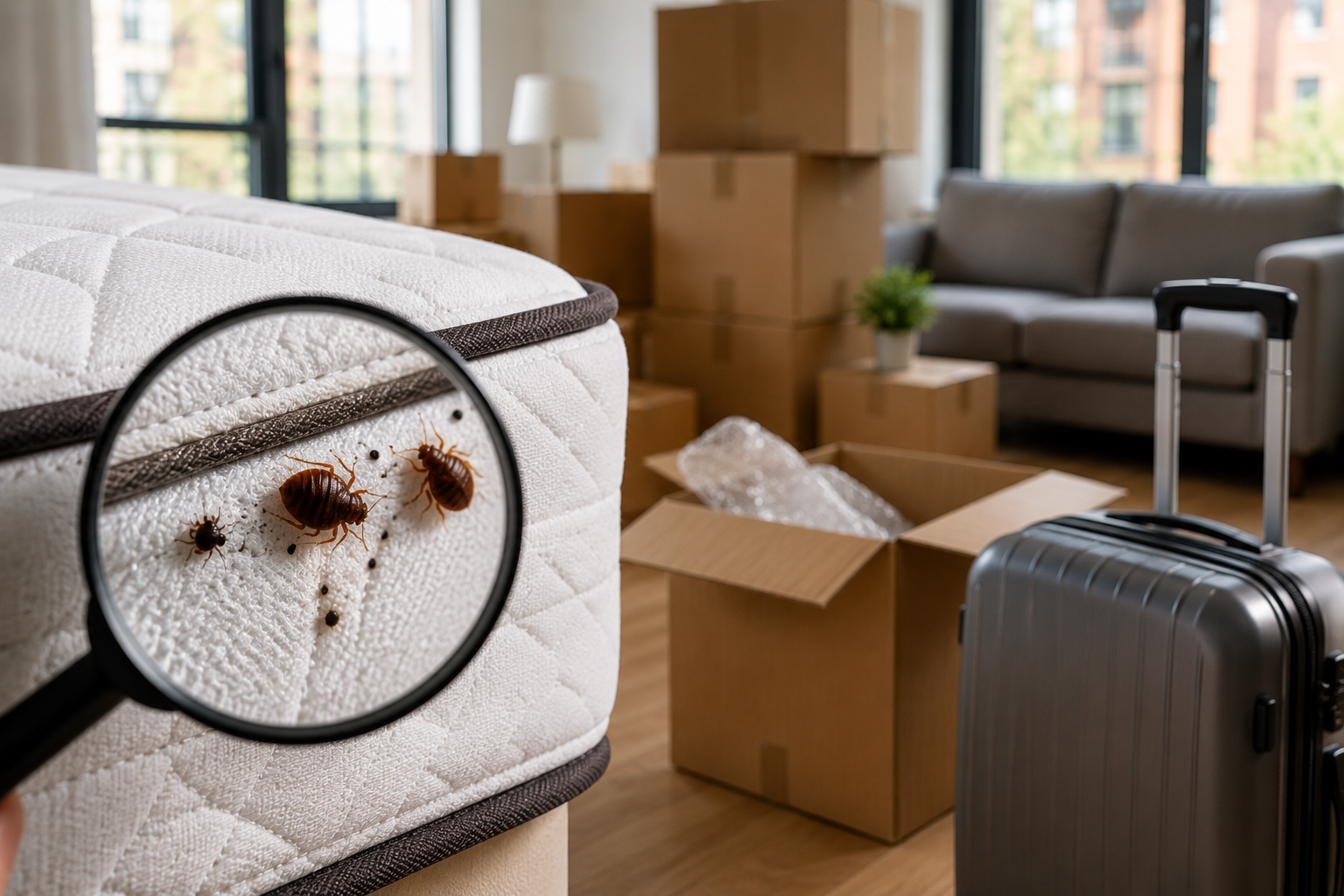
Moving into a new apartment should feel like a fresh start. You unpack your boxes, arrange your furniture, and begin settling into your new space. But there is one problem many renters do not expect: bed bugs can move with you.
Bed bugs are small insects that can hide in luggage, clothing, bedding, furniture, and moving boxes. If they were present in your previous home, they may travel with your belongings and start a new infestation after you move.
Even if your new Forest Hills apartment looks clean, that does not always mean it is free from bed bugs. These pests can hide in tiny cracks and remain unnoticed until they begin feeding.
If you are planning a move or have recently moved into an apartment, understanding how bed bugs travel can help you avoid a larger problem. For renters who need bed bug treatment Forest Hills NY, early action can make the process much easier.
Can Bed Bugs Move With Your Belongings?
Yes, bed bugs can travel with household belongings.
They do not live on people like lice. Instead, they hide in places that are close to where people sleep or rest. During a move, items that normally stay in one room are packed into boxes, bags, and moving vehicles.
This gives bed bugs many chances to travel.
Common items that may carry bed bugs include:
- Suitcases and travel bags
- Blankets and bedding
- Clothing
- Used furniture
- Backpacks and handbags
- Cardboard boxes
- Mattresses and box springs
A single unnoticed bed bug can become a bigger concern if it reaches a new apartment and finds suitable hiding places.
Why Can a New Apartment Still Have Bed Bugs?
There are two possible situations after a move.
First, bed bugs may already be present in the new apartment. They can remain hidden in mattresses, bed frames, baseboards, furniture, wall cracks, and other areas.
Second, the insects may arrive with your belongings.
In an apartment building, there can also be movement between nearby units. Bed bugs may travel through cracks, wall spaces, electrical outlets, and other connected areas.
That is why seeing a bed bug shortly after moving does not automatically prove that your belongings brought them into the apartment.
How Do You Know If Your Belongings Have Bed Bugs?
Finding one insect can be difficult because bed bugs are small and tend to hide.
Instead of looking only for live insects, check for other signs.
You may notice:
- Small dark spots on sheets or mattresses
- Tiny blood marks on bedding
- Shed skins near sleeping areas
- Pale eggs or eggshells
- Live bed bugs around mattress seams
- Unexplained bites after sleeping
The U.S. Environmental Protection Agency recommends inspecting sleeping areas and looking carefully around mattress seams, bed frames, furniture, and other hiding places when checking for bed bugs.
Should You Inspect the Apartment Before Unpacking?
If possible, yes. A quick inspection before unpacking everything can help you spot signs early. Start with the bedroom because bed bugs often stay close to places where people sleep. Check the mattress seams, box spring, headboard, bed frame, and nearby furniture.
Then inspect upholstered furniture and other areas where people spend long periods sitting.
If you find suspicious signs before unpacking, avoid moving additional belongings into the room until the situation is checked. This can make later treatment easier because there are fewer items to inspect and move.
What Should You Check in a New Forest Hills Apartment?
A new apartment inspection does not have to take hours. Focus on areas where bed bugs are most likely to hide.
Look closely at:
- Mattress seams and labels
- Bed frame joints
- Headboards
- Nightstands
- Upholstered chairs
- Sofa seams
- Baseboards near the bed
- Cracks around furniture
- Areas behind or underneath furniture
Pay special attention to dark, protected spaces. Bed bugs are not attracted to dirt. A clean apartment can still have them.
Can Moving Boxes Bring Bed Bugs?
Yes, although the risk depends on where the boxes came from and how they were stored.
Used cardboard boxes can provide hiding places for insects. Boxes stored in garages, storage areas, moving facilities, or other places with pest activity deserve extra attention.
If possible, use new moving boxes rather than boxes that have already been used in another home.
After moving, avoid leaving boxes scattered around the bedroom for long periods. Unpack them, inspect the contents, and remove unnecessary cardboard from the apartment.
What About Used Furniture?
Used furniture deserves particular attention. A secondhand bed frame, sofa, recliner, or mattress can carry bed bugs into an otherwise unaffected apartment.
Inspect furniture carefully before bringing it indoors. Look at seams, joints, screw holes, folds, cracks, and the underside of the item.
Mattresses and upholstered furniture can be especially difficult to inspect because bed bugs may hide deep inside them.
If you are unsure about an item, consider having it inspected before bringing it into your new apartment.
Can Clothing Carry Bed Bugs?
Clothing can carry bed bugs when insects are hiding in folds, bags, or nearby belongings. After moving from a home where bed bugs were present, wash and dry clothing according to the fabric care instructions.
Heat from a dryer can be useful for treating suitable clothing and fabrics. The EPA recommends using a clothes dryer on a high setting for items that can safely tolerate the heat.
Do not assume that simply moving clothing into a clean closet removes the risk.
What Should You Do If You Find a Bed Bug?
Try not to panic. If you find a suspected bed bug, avoid crushing it or throwing it away immediately if you can safely preserve it for identification.
Take a clear photo or place the insect in a sealed container.
Then inspect the nearby sleeping area.
Do not immediately move to another bedroom. Moving from one room to another can spread the problem because the insects may follow you through your belongings.
If signs continue, consider contacting a professional for inspection.
Should You Throw Away Your Mattress?
Not necessarily. Throwing away furniture is often one of the first reactions people have after finding bed bugs. However, getting rid of a mattress does not necessarily solve an infestation.
Bed bugs can also hide in:
- Bed frames
- Baseboards
- Nightstands
- Sofas
- Clothing
- Bags
- Wall cracks
If the rest of the apartment is not treated, replacing the mattress may not prevent the problem from returning.
A professional inspection can help determine whether furniture needs treatment or replacement.
Can Bed Bugs Spread Between Apartments?
Yes. Apartment living can make bed bug control more complicated because units share walls, floors, ceilings, hallways, and utility spaces.
If a nearby unit has an infestation, bed bugs may sometimes move into another unit through openings and connected areas.
This is one reason renters should report suspected bed bug activity to building management promptly.
Treating only one room may not be enough when the source involves another part of the building.
How Can You Prevent Bed Bugs After Moving?
A few practical habits can reduce the chance of bringing bed bugs into your new apartment.
Before moving, inspect your belongings. Pay special attention to furniture, bedding, luggage, and storage boxes.
After arriving, avoid placing bags and boxes directly on beds or upholstered furniture.
Keep clothing and other washable items organized so they are easier to inspect.
If you recently lived somewhere with known bed bug activity, take extra care with belongings before bringing them into the new apartment.
These steps cannot guarantee that bed bugs will never enter your home, but they can reduce opportunities for them to travel.
When Should You Contact a Bed Bug Professional?
A professional inspection can be helpful when you see repeated signs or cannot determine whether an insect is a bed bug.
You may want professional help if:
- You repeatedly find suspicious insects
- New signs appear on your bedding
- You notice activity around the bed
- You find bed bug eggs or shed skins
- You recently moved from an infested home
- You see bed bugs in more than one room
A bed bug treatment service can involve inspection, identification, treatment planning, and follow up checks.
The exact approach depends on the size of the infestation, the apartment layout, and where activity is located.
Why Early Detection Matters
Bed bugs reproduce over time, so ignoring the first signs can allow the problem to become harder to manage.
Early detection gives you a chance to address the problem before insects spread into more furniture and rooms.
This is especially important in apartment buildings where nearby units may also be affected.
If you recently moved and notice suspicious signs, contacting a bed bug exterminator Forest Hills can help you determine whether you are dealing with an active infestation or another type of insect.
What If You Already Moved Everything In?
Do not assume the situation is hopeless. Start by limiting unnecessary movement of belongings between rooms. Inspect the bedroom and other areas where you spend significant time. Wash and dry suitable fabrics. Inspect luggage and bags. Keep clutter under control so inspection is easier.
If you suspect bed bugs, avoid using random pesticides or repeatedly spraying different products. Misuse of pesticides can create health risks and may not reach insects hiding in protected areas.
The EPA recommends following pesticide label directions carefully and considering integrated pest management methods for bed bug control.
Conclusion
Can moving into a new Forest Hills apartment bring bed bugs with you? Yes, it can happen if bed bugs are hiding in luggage, clothing, furniture, bedding, boxes, or other belongings. They may also already be present in the apartment or nearby units, so finding one after a move does not always tell you where the problem began. Inspecting your belongings, checking the sleeping area, limiting clutter, and responding quickly to suspicious signs can help reduce the chance of a larger infestation. If you need bed bug treatment Forest Hills NY, professional inspection and treatment can provide a clearer path forward.
Gotcha! Bed Bug Inspectors provides professional pest control services for property owners and renters dealing with bed bug concerns. Their team can help identify signs of activity and recommend an appropriate treatment approach based on the situation.
Frequently Asked Questions
Can bed bugs come with me when I move?
Yes. Bed bugs can hide in luggage, furniture, clothing, bedding, boxes, and other belongings. They can travel with household items from one home to another.
Can a clean new apartment have bed bugs?
Yes. Cleanliness does not guarantee that an apartment is free from bed bugs. They can hide in cracks, furniture, mattresses, and other protected areas.
Should I inspect my apartment before unpacking?
Yes. Checking the bedroom, mattress, bed frame, upholstered furniture, and nearby areas before unpacking everything can help you identify signs early.
Can used furniture bring bed bugs into my apartment?
Yes. Used beds, sofas, chairs, and other furniture can carry bed bugs. Inspect secondhand furniture carefully before bringing it indoors.
Can bed bugs move from another apartment?
They can sometimes move between connected apartments through cracks, wall spaces, utility openings, and other pathways.
Should I throw away my mattress if I find bed bugs?
Not automatically. Bed bugs may also be hiding elsewhere in the apartment. Professional inspection can help determine whether the mattress can be treated or should be replaced.
How soon should I act after finding a bed bug?
It is better to investigate promptly. Early action can help identify the source before the insects spread to additional areas.